
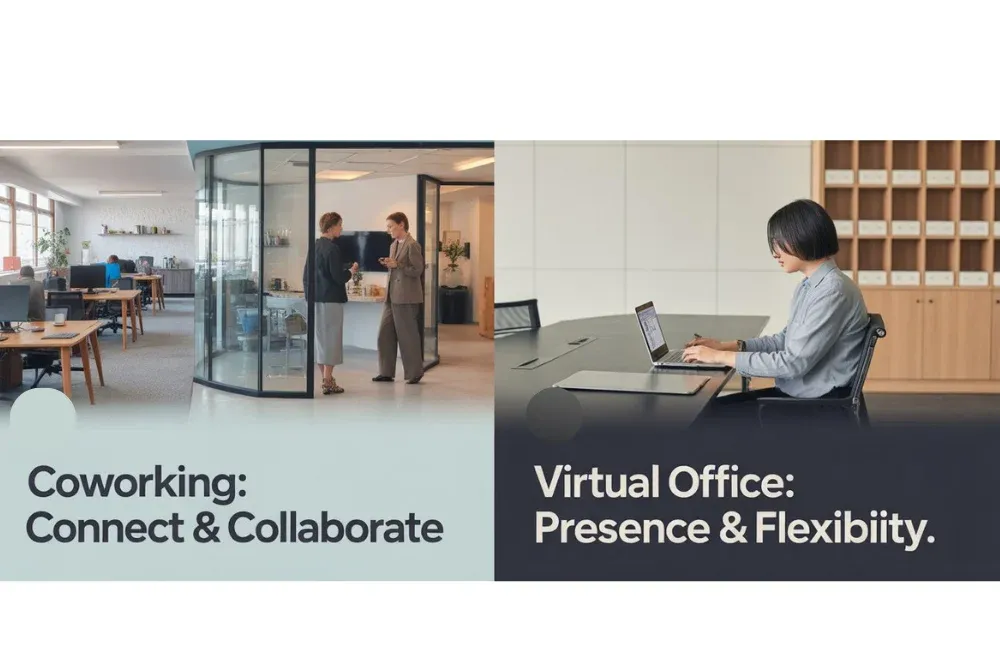
Soul of Work in Kakkanad, Kochi, gives professionals two very different ways to manage their work life. A coworking space is about being present in an office, sharing facilities, and working alongside others. A virtual office is about maintaining a business identity without sitting at a desk every day. The choice is not about better or worse, but about what suits a company’s stage and style of working.
What is a Coworking Space?
A coworking space is nothing complicated. It’s an office where different people and companies sit together and use the same facilities. You’ll find desks, internet, meeting rooms, and a few shared corners that make daily work easier. Many freelancers use it because they don’t want the cost of a private office. Small firms also pick it when they need flexibility. What makes coworking different is the mix. You get your own space to work, but still have others around to interact with when you want.
What is a Virtual Office?
A virtual office is a service that gives a company a professional business address without requiring a physical workspace. It usually includes mail handling, call answering, and access to meeting rooms when needed. For many small businesses and freelancers, it solves the problem of looking credible to clients while avoiding the cost of renting an office. Companies that work remotely also use it to keep a base in a city. It helps maintain a sense of presence and legitimacy without requiring anyone to be tied to a desk.
Key Differences Between Coworking Spaces and Virtual Offices
Coworking spaces and virtual offices are often considered together, but they meet very different needs. The distinction lies in how businesses want to operate day to day, how much they want to spend, and the kind of presence they need to show. Looking at a few key points makes the differences clear.
Physical Space
A coworking space gives you a desk, a chair, and an actual workplace. You sit alongside others and use the facilities provided, from Wi-Fi to meeting rooms. A virtual office does not provide a seat; it gives you the right to use the address and certain services, but you are not physically working there.
Cost Structure
Coworking usually costs more than a virtual office because you are paying for space and amenities every day. Virtual offices remain cheaper, since the main service is the address and some support functions. For many small businesses, this difference in cost is the deciding factor.
Flexibility
With coworking, you can just walk in and start working. Some days it might be a shared desk, other times a private cabin if the team has grown. The model adjusts to your needs. A virtual office handles flexibility differently. You might be working from home or another city, but still keep a registered base in Kochi through the service.
Ideal Business Use Case
Freelancers and small startups often choose coworking because they need a regular place to sit and work. Virtual offices make more sense for firms that already work remotely but still want a proper address for official records or client trust.
Networking and Community
Sitting in the same space as freelancers, startups, and small teams often leads to conversations and contacts you wouldn’t get working alone. A virtual office doesn’t give you that day-to-day environment since it is mainly a service for address and support, not a place where people gather.
Pros and Cons of Coworking Spaces
Pros
- You walk into a space that already has internet, desks, and power running, so there’s no setup needed.
- Plans are usually flexible. Some people just book a desk for a week, others take a cabin for months.
- Being in the same room with freelancers, small firms, and remote workers means you often end up talking, sometimes building contacts, without planning for it.
- Day-to-day things like cleaning or fixing small issues are usually taken care of by the space owners, so members don’t have to deal with them.
Cons
- The common areas can get noisy at times, and that makes it harder to focus if you need a quiet setup.
- The fee makes sense only if you’re using the space often. For light use, it feels expensive compared to a virtual office.
- On busy days, finding the seat or meeting room you prefer isn’t guaranteed, and you may have to manage with what’s left.
Pros and Cons of Virtual Offices
Pros
- A virtual office lets you use a city address on your documents and client communication, so the business looks established even if you don’t rent a space.
- Letters, parcels, and calls can come to that address first and then be passed on to you, which is useful if you’re often on the move.
- It helps freelancers, consultants, and small firms appear established without taking on the expense of a long lease.
- Larger companies sometimes use virtual offices when they want a local presence in multiple cities without setting up full branches.
Cons
- You do not get a seat or a daily workplace; the service is limited to address and support functions.
- Networking is practically absent since you are not sharing space with other professionals on a daily basis.
- Booking a meeting room isn’t always unlimited. In many cases, you’ll get a fixed number of hours, and anything extra is charged separately.
- If a team needs to sit together often, relying only on a virtual office won’t work; they’ll still need some kind of physical space.
Which One is Right for Your Business?
Choosing between a coworking space and a virtual office depends on the way your work is set up. If you need a desk and a place to sit every day, coworking is usually the better choice. If a team is already working from home or spread across locations, a virtual office can cover the basics—an address, call handling, and a place to meet clients when required. The choice is usually practical, not about following a trend.
Dig deep : 24/7 Coworking Spaces in Kochi: Perfect for Remote Workers and Entrepreneurs
Conclusion
Coworking and virtual offices serve different needs. Some people need a desk, Wi-Fi, and the energy of a shared space. Others only want a proper address with a few support services to stay professional on paper. Soul of Work in Kakkanad, Kochi, makes both available, leaving it to businesses and individuals to decide which setup matches the way they actually work.